

Scientific Tourism in La Palma: Exploring the Universe and Geology
La Palma is a privileged destination for scientific tourism, where the island’s impressive geological history is combined with one of the darkest and clearest skies in the world. Recently, a group of physics students from the UK travelled here for a unique academic experience. During their stay, they explored the volcanic geology of the island and delved into the study of the cosmos at the Roque de los Muchachos Observatory, one of the most important astronomical centres on the planet.
Discovering the geological history of La Palma
La Palma is a true natural laboratory of volcanology, where the students have analysed first-hand the geological activity and its impact on the environment. During their visit, they toured key sites that show the volcanic evolution of the island and its scientific importance.
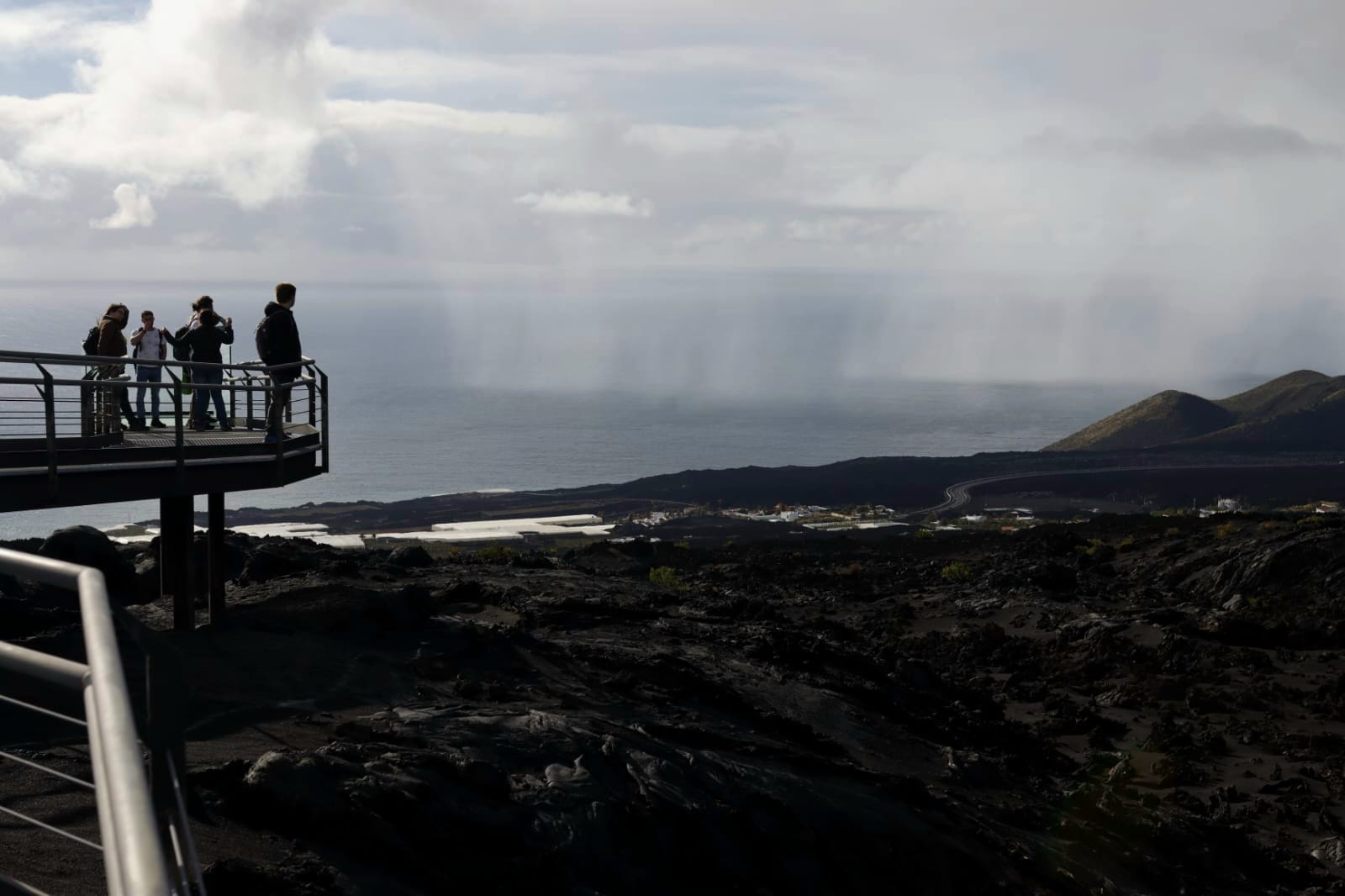

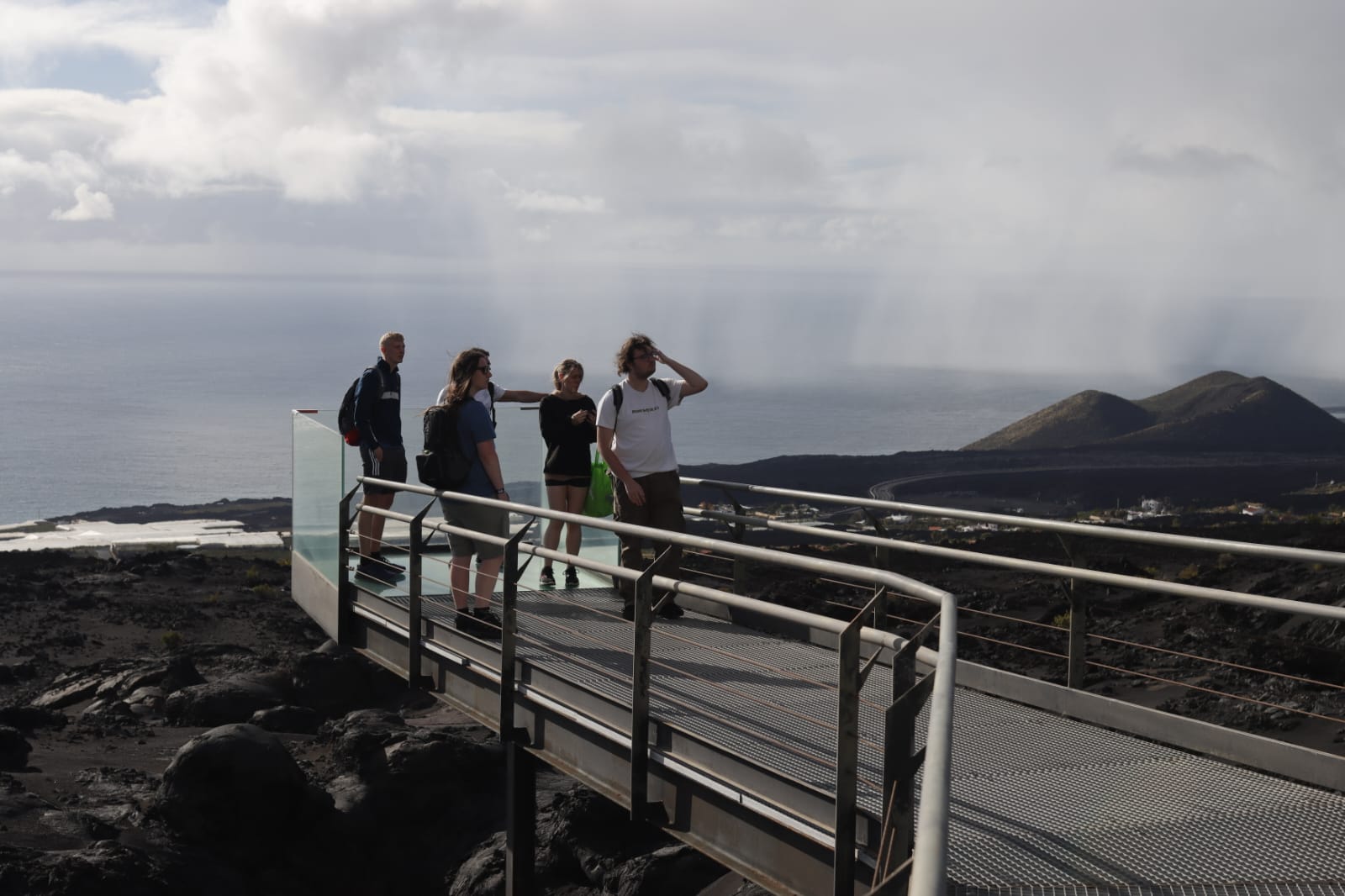
Main geological sites visited
Tajogaite Volcano
Located on the Cumbre Vieja ridge, the Tajogaite Volcano is the result of the 2021 eruption, one of the most significant eruptions of the 21st century in Spain. Here, the students observed the effects of the eruptive process on the landscape, studying in situ the morphology of the lava flows and the regeneration of the ecosystem. They also visited the Caños de Fuego Volcanic Caves Interpretation Centre and the Cueva de las Palomas, where they explored volcanic tubes formed by the solidification of lava.
Fuencaliente Visitor Centre
This space offers an educational tour of volcanic activity on the island and its role in the formation of La Palma. Using models and interactive projections, students were able to understand how the eruptions have shaped the landscape and influenced the local ecosystem.
Fuencaliente Salt Flats
A clear example of the relationship between geology and local economic activity. The Fuencaliente Salt Flats, located on the south coast of the island, take advantage of the volcanic geography for the artisanal production of salt.
The Lime Trees
This laurel forest, declared a Biosphere Reserve by UNESCO, shows how geology influences biodiversity. The students were able to analyse the relationship between the geological formation of the land and the adaptation of endemic species to this ecosystem.

Turismo científico en La Palma
Astronomy at the Roque de los Muchachos Observatory
La Palma is one of the most important astronomy destinations in the world thanks to the exceptional quality of its night sky. The Roque de los Muchachos Observatory, located at an altitude of 2,396 metres, is home to some of the most advanced telescopes in the world, including the Gran Telescopio Canarias (GTC), the largest optical-infrared telescope on the planet.
The students participated in a specialised programme where they acquired advanced knowledge in astronomical observation. Astronomical activities carried out:
- Handling and assembling telescopes
- They learned how to use semi-professional telescopes, from mounting to alignment and calibration for night-time observation.
- Identification of constellations and celestial objects
- Guided by experts, they explored the sky of La Palma, identifying stars, planets and galaxies visible with the naked eye and with telescopes.
- Observing star clusters, nebulae and galaxies
They connected the theory learnt at the university with the direct observation of astronomical objects such as the Andromeda Galaxy (M31), the Orion Nebula (M42), other Messier objects, double stars and the visible planets Saturn, Mercury, Mars and Jupiter.
Visit to the Roque de los Muchachos Observatory and the Gran Telescopio Canarias
They toured the observatory facilities and learned about the operation of telescopes such as MAGIC and LST, specialised in detecting gamma rays, as well as the Gran Telescopio Canarias, the largest optical telescope in the world.
- Specialised talk on proposals for observing time
- They received information on how to apply for observing time (proposals) on professional telescopes, opening up new opportunities for their research projects in astrophysics.
La Palma, a key destination for scientific tourism
This experience demonstrates the enormous potential of La Palma as a destination for scientific tourism. The unique combination of its geological and astronomical wealth makes the island an ideal natural classroom for students, researchers and science enthusiasts.

Organise your visit with AstroLaPalma
At AstroLaPalma, we design customised educational experiences for academic groups and science lovers. If you belong to a university and want to organise a scientific trip for your students, contact us and we will create an experience tailored to your needs (LaPalmaStars.com).
Discover La Palma, where geology and astronomy meet under one of the clearest skies on the planet.